Time-Sensitive Challenges Fueling Persistent Engagement in Digital Casino Reward Systems
Jakob Reed · Oct 9, 2026
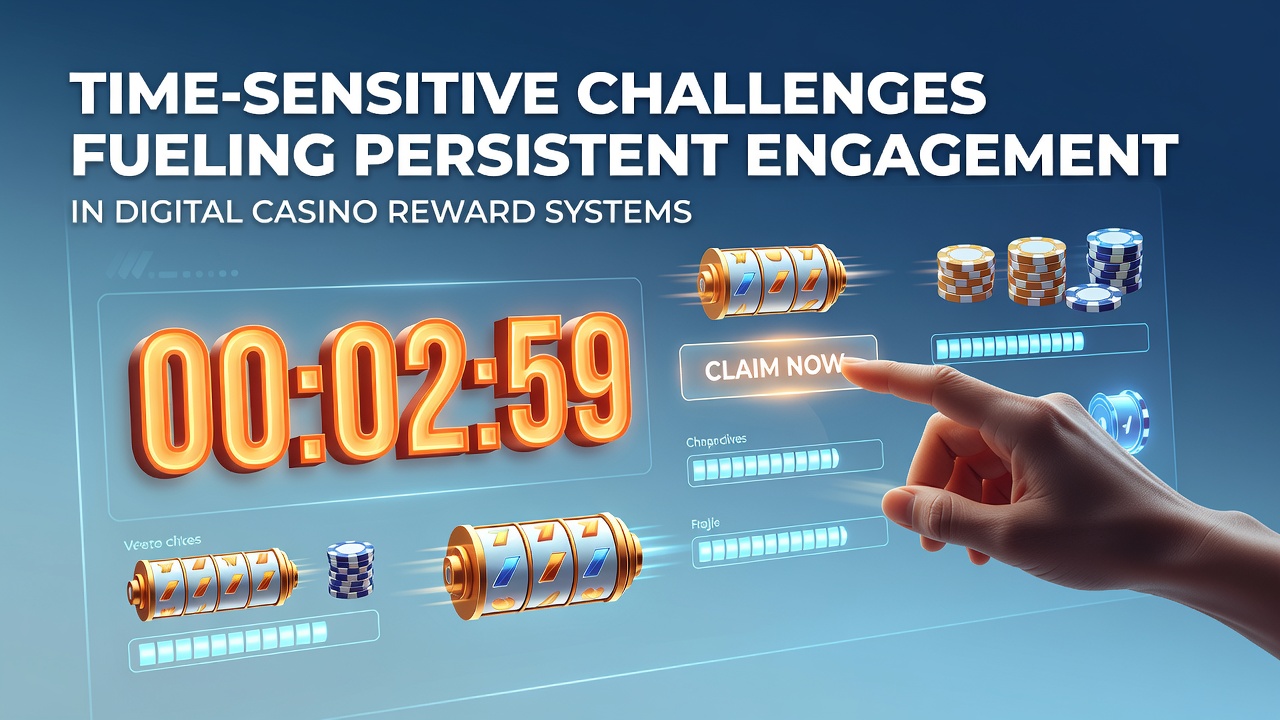
Time-Sensitive Challenges Fueling Persistent Engagement in Digital Casino Reward Systems
Digital casino platforms have incorporated time-sensitive challenges as core components of their reward systems, and these elements encourage repeated player interactions through structured deadlines and limited availability windows. Operators design daily login streaks, hourly bonus activations, and event-based competitions that reset on fixed schedules, which creates recurring reasons for users to return to mobile applications and websites. Data from industry monitoring services shows participation rates climb when these timers appear prominently on user dashboards, while engagement metrics drop once deadlines pass without completion.
Mechanics Behind Countdown-Driven Rewards
Time-bound tasks typically require players to complete a set number of spins, accumulate points within a window, or unlock tiers before expiration, and these structures tie directly into broader loyalty frameworks that award escalating benefits. Software providers integrate real-time clocks that display remaining hours or minutes, which prompts immediate action rather than deferred participation. Observers note that such mechanics align with behavioral patterns observed across app-based entertainment, where urgency prompts higher session frequency compared to open-ended reward tracks.
Platforms adjust challenge parameters seasonally, and October 2026 brought increased emphasis on multi-day events coinciding with major sporting calendars in several jurisdictions. Regulatory filings from the New Jersey Division of Gaming Enforcement indicate operators reported measurable lifts in daily active users during these periods, with time-limited features accounting for a substantial share of incremental activity. The approach avoids permanent alterations to base game mathematics while still generating sustained attention through temporary overlays.
Player Retention Patterns and Supporting Data
Studies conducted by research groups at universities with gaming analytics programs reveal that users exposed to countdown mechanics maintain longer subscription intervals than those navigating purely cumulative systems. Retention curves flatten less steeply when challenges refresh at consistent intervals, because players develop routines around checking in before timers elapse. Figures compiled by the Canadian Gaming Association demonstrate regional variations, with provinces that permit digital casino operations showing stronger correlation between time-bound promotions and month-over-month user stability.
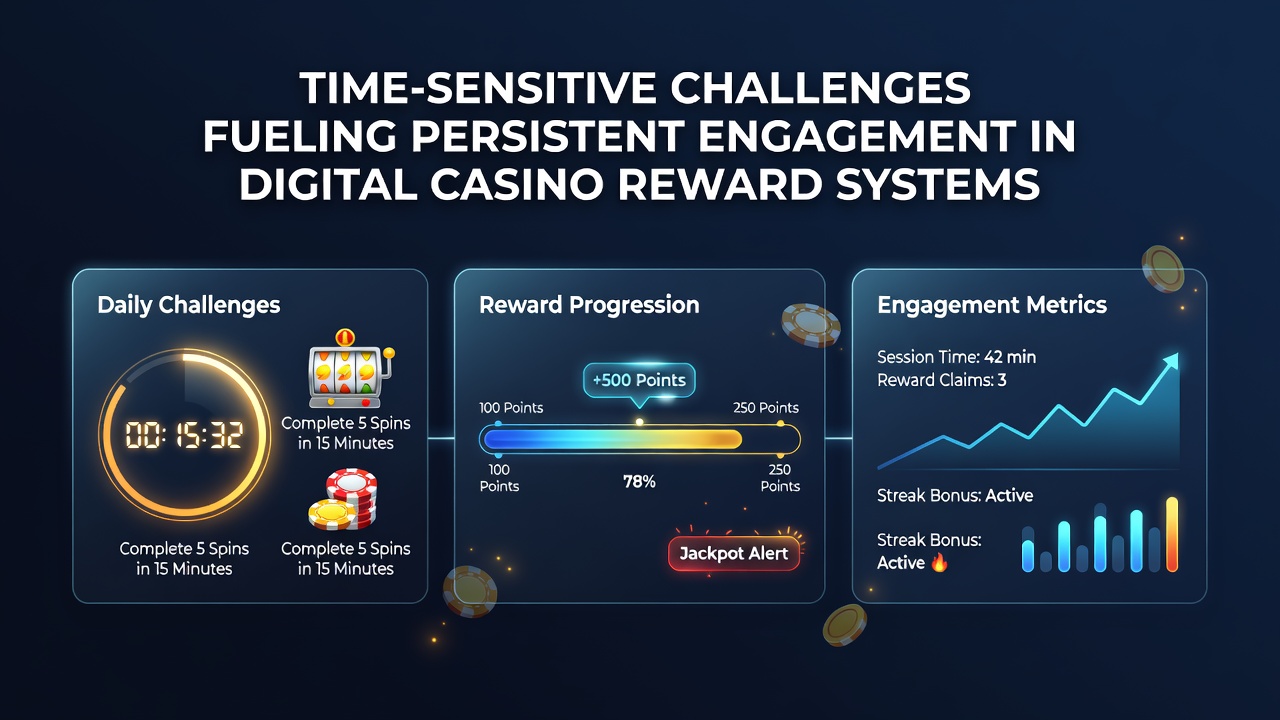
Yet the same datasets highlight that excessive frequency of short timers can lead to fatigue, prompting some operators to space events across weekly cycles instead. Industry reports from the Australian Communications and Media Authority track similar outcomes, where balanced scheduling yields higher completion rates without corresponding increases in self-exclusion requests. Those who manage these systems emphasize calibration based on player segmentation, separating high-frequency users from occasional participants through tailored challenge difficulty.
Integration With Broader Loyalty Structures
Time-sensitive elements often feed into tier advancement systems, where successful completion contributes points or badges that persist beyond the immediate deadline. This layering allows operators to maintain momentum across multiple reward layers without relying solely on one mechanic. External audits performed by independent testing laboratories confirm that such integrations remain compliant with fairness standards, as long as published rules clearly state expiration conditions and eligibility criteria.
Trade associations such as the European Gaming and Betting Association have published guidelines encouraging transparent communication of time limits, and member companies have incorporated these recommendations into interface design standards. The result appears in clearer display of rules alongside countdowns, which reduces disputes and supports continued platform trust. Data aggregated across multiple markets shows platforms following these practices experience steadier growth in loyalty program enrollment during periods of heightened challenge activity.
Regulatory Context and Operational Adjustments
Jurisdictions continue to refine oversight of promotional mechanics, with focus on ensuring time-sensitive offers do not obscure core game probabilities. Updates issued in late 2026 by several state regulators required additional disclosures when challenges link to deposit incentives, prompting operators to revise notification sequences. Compliance teams now routinely test timer accuracy and rule clarity before launching events, which adds operational steps but aligns with evolving expectations around player information access.
International comparisons reveal differing tolerances, and operators active in multiple regions adapt challenge formats accordingly. Some markets favor longer windows measured in days, whereas others permit shorter bursts that emphasize rapid engagement. These variations create distinct operational playbooks, yet the underlying principle remains consistent: structured urgency sustains participation when paired with visible, attainable rewards.
Conclusion
Time-sensitive challenges have become established tools within digital casino reward ecosystems, and available metrics indicate they contribute to ongoing user activity when implemented with appropriate pacing and transparency. Continued monitoring by regulators and researchers will shape future refinements, particularly as platforms expand across additional jurisdictions. The interplay between deadlines, loyalty progression, and player routines offers a concrete area for ongoing observation as the sector evolves through 2026 and beyond.